
CERN consumes electricity on the scale of a mid-sized Swiss city, around 1,290 GWh per year. A significant chunk of that powers the cooling and ventilation systems that keep the experiments running: over 2,000 motors driving pumps and fans across a vast underground and surface complex.
The problem? Most of those motors were old, inefficient, and running at full speed regardless of actual demand, controlling flow by throttling valves rather than simply slowing down. It is the engineering equivalent of braking while keeping your foot on the accelerator. Around 60% had no speed control at all, and the majority sat in the two lowest efficiency classes.
The motorSENSE collaboration between CERN and ABB set out to change that. Over two years (2022 to 2023), the project deployed 127 smart sensors across the accelerator complex, audited nearly 900 motors, and built detailed models of real cooling networks, to find out exactly how much energy was being quietly wasted, and what it would cost to fix it.
The Challenge
Waste hidden in plain sight
Cooling and ventilation accounts for 19% of LHC machine energy. Most motors were old, inefficient, and running flat out regardless of actual demand.
IE1/IE2
The majority of CERN’s motors sit in the two lowest efficiency classes.
90 GWh
Consumed each year by cooling and ventilation infrastructure alone.
5%
CERN’s self-imposed cap on electricity growth versus 2018 baseline
The Approach
The project developed a tiered appraisal methodology, balancing the effort needed against the accuracy required at each stage. Selection focused on 900 motors chosen for their age, criticality, energy savings potential, and diversity of application.
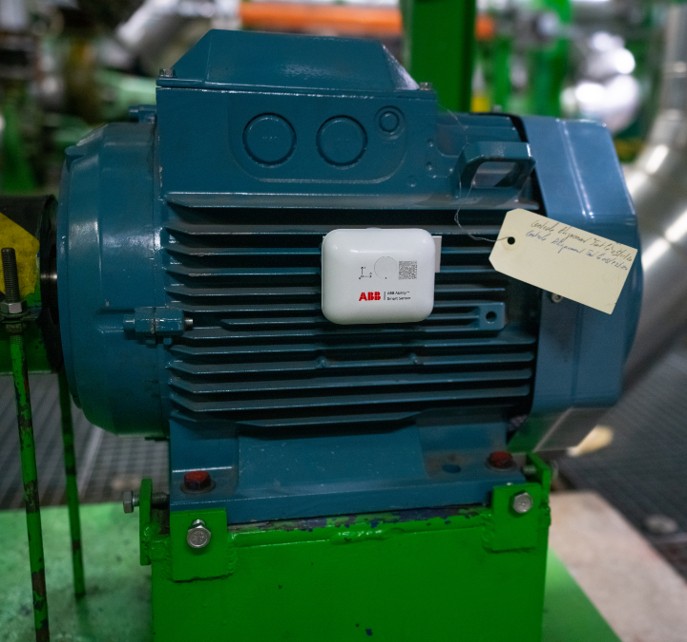
Rapid screening across the fleet
Basic motor data combined with load estimated via ABB Smart Sensor. Minimal data needed, suitable for a first pass across the full fleet. Used to identify the top candidates from 788 assessed assets, flagging those with the highest savings potential.
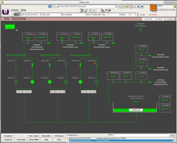
Targeted analysis with flow data
Adds real flow data from CERN’s SCADA system to the picture. A useful middle ground, more precise than screening alone but manageable for a larger number of higher-priority motors.
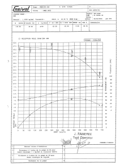
Deep study with full pump curves
Full pump curve data integrated with SCADA flow data. Reserved for the highest-potential networks, enabling detailed hydraulic modelling and validated energy estimates.
The old way: Throttling valves
Motor runs at full speed. A valve restricts the flow. Energy is wasted rather than saved.
11% saved
for a 30% flow reduction
The better way: Variable Speed Drive
Motor slows down when less flow is needed. Savings scale with the cube of speed reduction.
55% saved
for the same 30% flow reduction
The Results
From fleet-wide screening to detailed network modelling, the energy savings potential was consistently larger than expected, and the payback periods remarkably short.
17.4%
Average potential energy savings across the fleet based on motor-only upgrades. The top 30 assets showed savings exceeding 50% with Variable Speed Drive upgrades.
>50%
Savings validated through detailed engineering studies of real cooling networks. Confirmed feasible across multiple network types and operating conditions.
79%
Energy reduction modelled by CERN’s own Flownex digital twin of the SF6 to UW65 network, incorporating advanced control strategies.
~1.5y
The shortest payback period identified across all detailed network studies, with CO2 reductions of around 47 MT per year per network upgraded.
Beyond the motorSENSE Collaboration
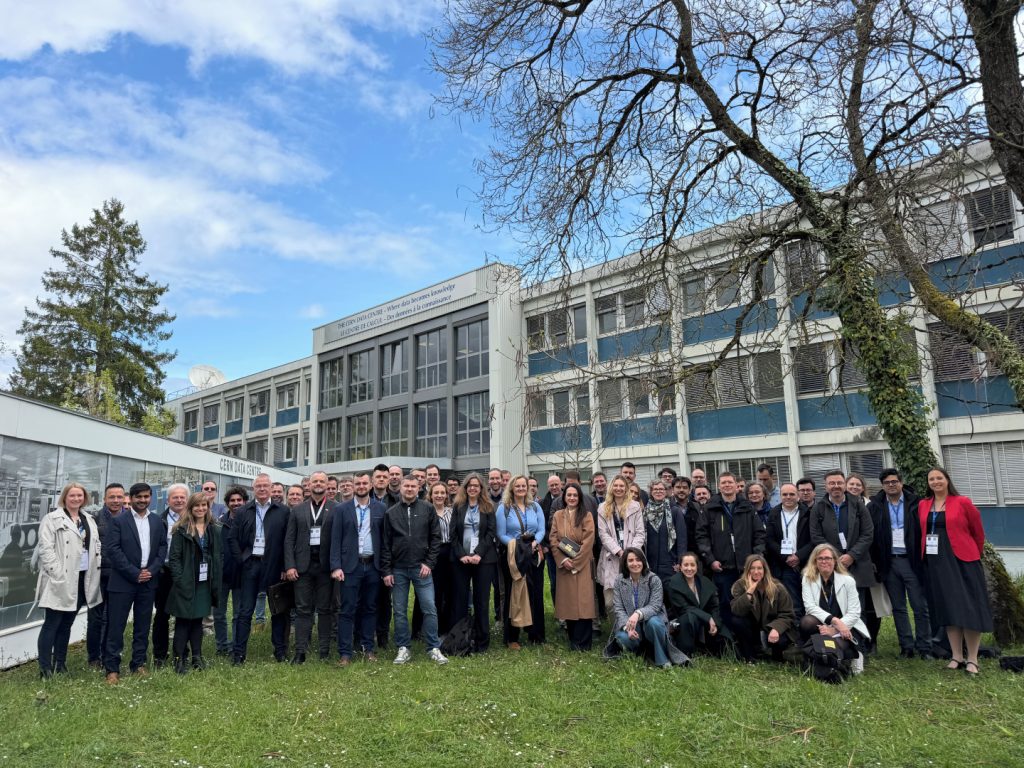
The 10-year energy efficiency consolidation programme approved May 2025
The GSI partnership in 2025 (CERN’s work inspiring a similar collaboration at Germany’s particle physics facility)
The future collaboration opportunities list (AI-augmented monitoring, data centre HVAC, OctaiPipe pilot, equipment procurement)
Watch more about the project